

In early 2020, Taiwan-India Joint Research Center on Artificial Intelligence at National Chung Cheng University (CCU) and its Indian partner school, Chitkara University, jointly organized the creative International Conference on Computing, Analytics, and Networking (ICAN 2020). It was the first time that the conference was held on different days in two countries, which was an innovative move, and brought a great impact on bilateral academic exchanges between India and Taiwan. The conference in Taiwan was attended by 124 people from six countries, including Taiwan, the United States, India, Indonesia, Vietnam, and Bangladesh. A total of 79 papers were presented at the conference, of which 40 papers were presented at CCU on February 7 and 8, and 39 papers in India on February 14 and 15. In addition, the conference also received technical support from IEEE, which published the conference proceedings.
ICAN 2020 was jointly organized by Taiwan-India Joint Research Center on Artificial Intelligence and Chitkara University in India, and supported by the Intelligence Technologies Department in Chiayi City Government and Intelligent Recognition Industry Service Research Center in National Yunlin University of Science and Technology. The conference also included industry sessions attended by Microsoft, Amazon Web Services (AWS), Oracle, Terasoft (Matlab), and Open AI Fab. The conference focused on "utilizing Taiwan's advantage of Edge AI" and "responding to Taiwan's New Southbound Policy." In addition, while the wave of 5G and Artificial Intelligence of Things (AIoT) is sweeping across the world, Taiwan has world-class IC industries such as TSMC, UMC, and MediaTek, and India has world-class software industries such as Tata, Wipro, and Infosys. The conference also focused on how we leverage our strengths to create advantages in Edge AI. The conference successfully created exchanges for industries, governments, academia, and research, and brought new opportunities for Taiwan-India academia and industry collaboration.
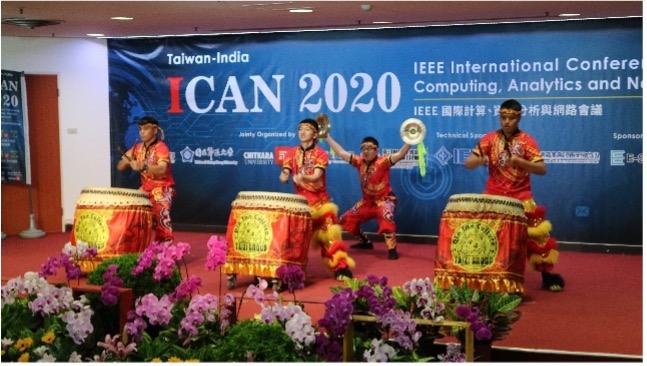
Figure 1: The opening ceremony of ICAN 2020
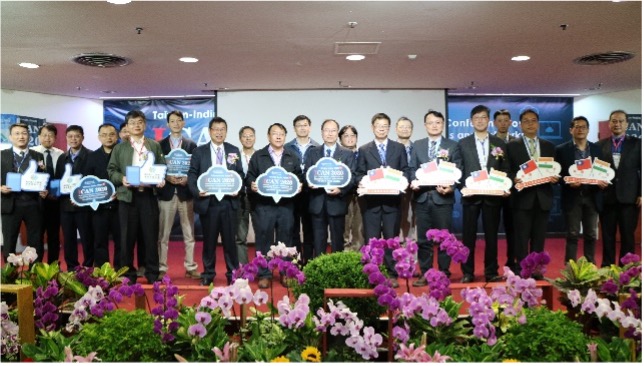
Figure 2: Distinguished guests at ICAN 2020
However, when we were busy making arrangements for both countries to attend bilateral conferences, the COVID-19 pandemic spread quickly across the world. As I remembered, in early February, I received a call from Rajnish Sharma, the Dean of Research in Chitkara University, telling me that their school had stopped teachers and students from going abroad. That was the first time I realized the severity of the pandemic. It was not expected that a year later, the pandemic in India is even more serious now.
"Disease Control Across Borders" initiative
"The situation is grim. My family and I are all afflicted by the virus. Please keep us in our prayers!" This was the message from a professor of our Indian partner school with whom we have worked closely for many years, and it made us feel sad and worried. The optimism of the Indian people seems lost somewhere in the dark these days. "Please keep safe and healthy, we have you in our prayers!" we replied, hoping to provide some comfort for our Indian friends. At the beginning of May, when the second wave of the pandemic was spreading rapidly in India, we devoted ourselves to the "Disease Control Across Borders" initiative to save lives. Taipei Economic and Cultural Center in India and the Science and Technology Division from the Ministry of Science and Technology (MOST) fully supported our initiative and became a strong backing force, urging us to do our part for our Indian friends. We have recruited 30 associations to join our initiative and provide assistance to our Indian partners. In the meantime, 30 enterprises also joined our initiative, hoping to serve as a catalyst to encourage more contributions and forge a bond between the two countries.
The Unstoppable "Expert on India"
Over the past year, although we have not been able to exchange ideas in person, we always keep in touch with them. Through Monthly Webinars and updates on WhatsApp, we have shown our support for each other and will not give in to the pandemic. Even in this difficult time, we have made many achievements. We cooperated with the renowned SRM University in South India to develop Smart Pandemic Prevention System, hosted the webinar on Artificial Intelligence and Hydraulic Engineering with Indian Institute of Technology Ropar, held the training session on Auto Machine Learning and Open Source with Alliance University, showcased Taiwan's achievement in smart city development in Bengaluru Tech Summit (BTS) 2020, the largest technology conference in Asia, attended Carnegie India to discuss the artificial intelligence technology plans in Taiwan and India with Indian companies, and participated in the launch of Navachar Journal founded by RKGIT University and served as a member of the Advisory Committee. During this time, we have attended at least 30 conferences in India and received over 100 international news coverage by the Indian media. It shows that we have spared no effort to build up Taiwan's influence in India. The latest issue of Business Today (May 2021) also featured the Taiwan-India Joint Research Center on Artificial Intelligence, naming CCU as the "Expert on India."
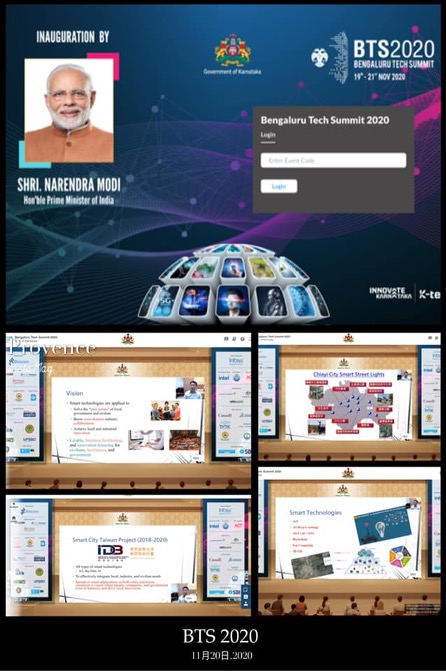
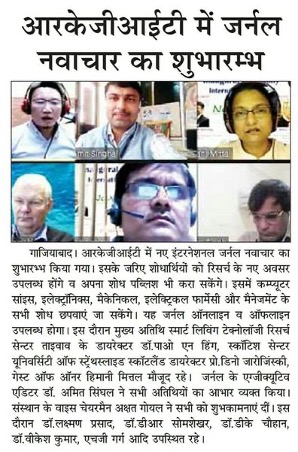
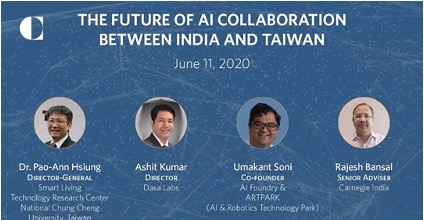
Figure 3: Taiwan-India Joint Research Center on Artificial Intelligence has been invited to give speeches at various events and ceremonies such as BTS 2020, Carnegie India, and the launch of Navachar Journal
Cooperation in Scientific Research under Cross-departmental Platform
During the global pandemic outbreak in June 2020, we were introduced by the Science and Technology Division from MOST and the Education Division from the Ministry of Education to start a partnership with SRM University. Chin-Tsan Wang, director of the Science and Technology Division, and Ling-Yun Tsai, director of the Taiwan Education Center at SRM University visited CCU to discuss cooperation with SRM University. When Taiwan and India held the first launch meeting on July 17, 2020, Dr. Kartar Singh, director of International Relations at SRM, Dr. G. Vadivu, Head of the Department of Information Technology, and several head nurses from SRM affiliated hospital participated together, and a consensus was quickly reached. SRM University organized a team and worked with us to develop the Smart Pandemic Prevention System. The SRM team is divided into four groups, including smart face recognition, social contact analysis, Edge AI application, and face mask recognition. As for our team, we have six graduate students from the Embedded System Laboratory of the Department of Computer Science and Information Engineering at CCU who are responsible for the joint development. At the end of July, we signed a statement of Intent and created a WhatsApp group to work closely with each other. After more than 8 months, the system was completed, and the results were announced at the press conference on March 24, 2021. Both Taiwanese and Indian media reported this meaningful cooperation afterwards. During the exchange of opinions, officials from both universities looked forward to commercializing the system and creating new opportunities for academia and industry collaboration. Smart Pandemic Prevention System can be used in schools and private facilities (e.g., hospitals) to conduct strict real-name registration, which requires all personnel to register by staff ID or face recognition. In addition, the system includes a thermal imaging camera, which supports the non-contact measurement of temperatures and ID registration.
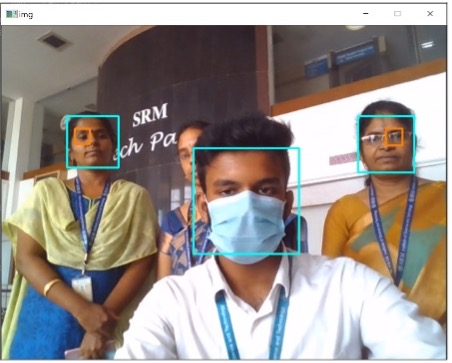
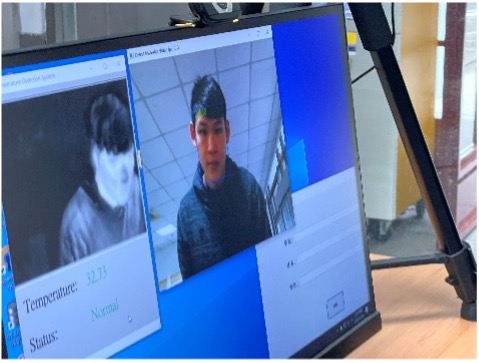
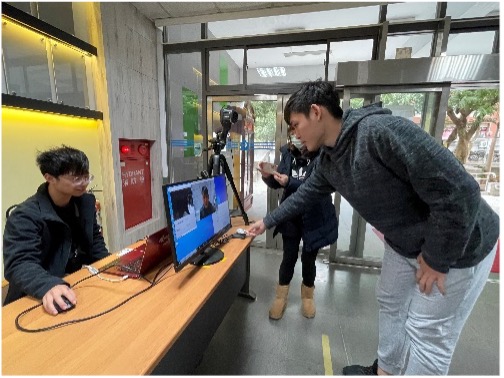
Figure 4: Smart Pandemic Prevention System developed by Taiwan-India Joint Research Center on Artificial Intelligence and SRM University
Making Friends with Indian Tech Titans by Cricket to Cultivate Talents
Cricket is India's national sport. In India, cricket players are even more popular than movie stars. Since last December, we have been in contact with two major Indian companies, Tata Consultancy Services Limited Taiwan Branch and Tech Mahindra Limited Taiwan Branch. The head of both companies visited CCU to learn about our work in the Taiwan-India Joint Research Center on Artificial Intelligence and the research results of CCU. When Karthigeyan Sethumadhavan, the Country Head of Tata Consultancy Services, visited CCU, he heard that Indian students at CCU play cricket every week and want to establish the first cricket club in CCU. He recalled his passion for cricket as a boy and decided to support the founding of the CCU Cricket Club. After more than three months of preparation, we finally held an international friendly cricket tournament on April 12, which was unprecedented in Taiwan, and Tata Consultancy Services sponsored the establishment of the cricket club. For this event, we presented the "CCU & Tata Cricket Commemorative Model" to the Head of Tata Consultancy Services. Combined with sports, the event also showcased the different folk cultures of Taiwan and India. Taiwanese traditional blessings of the Third Prince and the drumming performance made the opening ceremony even grander. The Indian dance group performed the love story between Krishna, the god of love, and his wife, Radha, filling the CCU baseball field with the lively and classical Indian music of Radha Kaise Na Jale. The event also attracted local journalists from Shih-Hsin TV and various media to experience the rare cricket tournament in Taiwan. Furthermore, we invited the elders from local communities to experience cricket together. In an atmosphere of joy, we created a new chapter in Taiwan-India cultural exchanges.
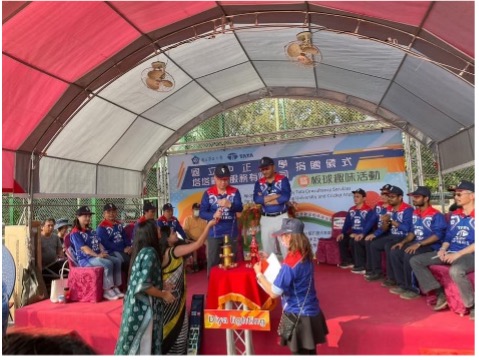
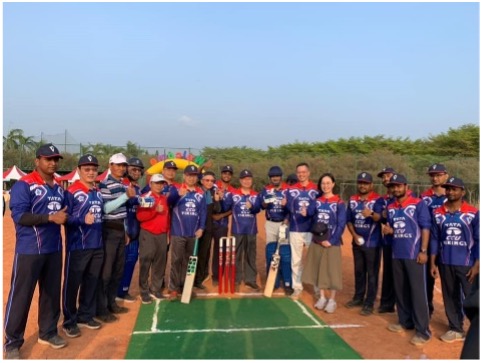
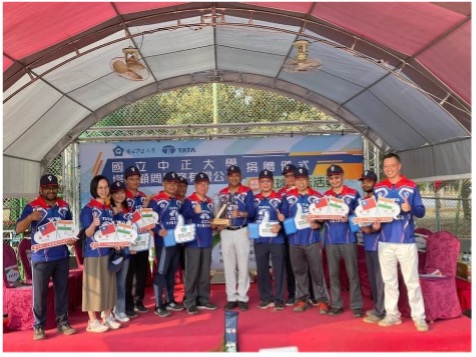
Figure 5: The sponsorship ceremony by Tata Consultancy Services for CCU and the friendly cricket tournament
On September 8, 2020, the headquarters of Tech Mahindra and the Taiwan-India Joint Research Center on Artificial Intelligence met online to discuss future cooperation. After reaching a consensus, Ashwin Pershad, Tech Mahindra Taiwan’s Business Head, visited CCU on September 18, 2020, and had a deep impression of our outstanding research results. After his visit, a memorandum of understanding (MOU) between the Taiwan-India Joint Research Center on Artificial Intelligence and Tech Mahindra was arranged. On December 28, 2020, CCU signed an MOU with Tech Mahindra in their office in Taipei 101 and discussed the collaboration with Nikhil Malhotra, chief innovation officer of Maker's Lab in Tech Mahindra. The MOU focuses on four areas, including artificial intelligence, smart agriculture (including bamboo technology), space technology, and quantum computing (including drones). Tech Mahindra reached an agreement with CCU to establish the world's ninth Maker's Lab at CCU, the first in Taiwan. We have started to build the Maker's Lab, introducing an internship program that involves: 1. Analyzing satellite images to evaluate the changes of crops (e.g. bamboo) in a specific area over many years. 2. Using drone photography for smart agriculture, and seeking solutions for the short battery life. 3. Smart telemedicine. 4. AIoT applications using XR technology in smart homes. We hope that the Maker's Lab will become an incubator of talents in Taiwan, benefiting teachers and students all over Taiwan.
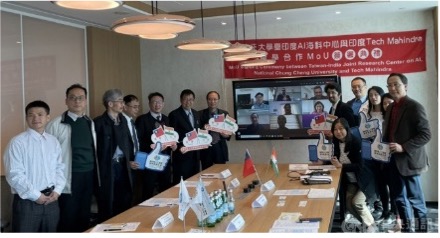
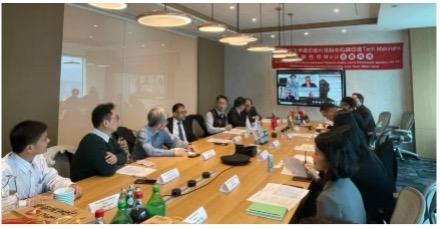
Figure 6: Taiwan-India Joint Research Center on Artificial Intelligence and Tech Mahindra signed a cooperation agreement
Taiwan-India Joint Research Center on Artificial Intelligence set up three years ago, has worked hard to achieve many milestones, and we hope to create more opportunities for future collaboration, benefiting scholars and students in Taiwan and India.
- Author: Pao-Ann Hsiung, Project Coordinator, and Ellen Hsu, Project Manager (Taiwan-India Joint Research Center on Artificial Intelligence, National Chung Cheng University)
- STIC Center: Taiwan-India Joint Research Center on Artificial Intelligence

