

International Webinar Series on Smart Healthcare Science and Technology targeted on exchanging up-to-date smart healthcare innovation of Asian Pacific region in the post-epidemic era. On March 22, the webinar series brought the topic “Biosensor Innovation" and had Asst. Prof. Ting-Yuan Tu, an expert in Cell Mechanics and BioSystems, was the moderator. The keynote speakers included Asst. Prof. Benchaporn Lertanantawong of Biomedical Engineering at Mahidol University from Thailand, Dr Man Chun Leong the interim CEO of Biolidics Ltd. from Singapore, as well as Prof. Chou-Ching Lin M.D. of Neurology at National Cheng Kung University from Taiwan.
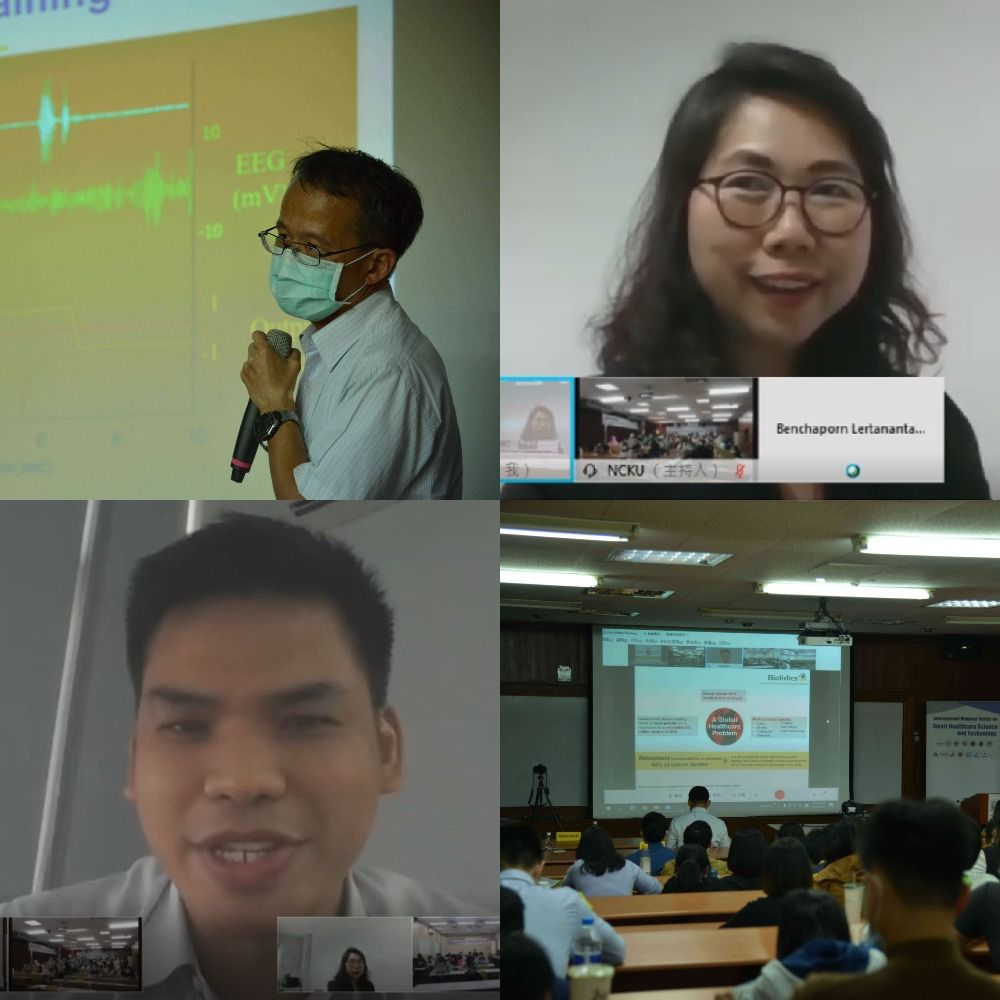
Pic 1: Taiwan, Thailand and Singapore academics and experts shared biosensor innovations
Most countries around the world are struggling with the COVID-19 pandemic and to a greater extent have increased the needs and awareness for epidemic prevention. Accordingly, global communities prioritize the integration of medicine and technology, and pay more attention to smart healthcare and precision medicine, hoping to provide a better medical and care environment, turning this global crisis into opportunities. When it comes to popular smart technologies such as the Internet of Things (IoT), big data, and 5G mobile networks, robust and versatile sensors are indispensable units to collect huge amounts of data and enable further health analytics. In particular, biosensor plays an important role in their potential in epidemic prevention and related medical applications, as they can be widely used to collect abundant real-time health information and make connections with rear-end diagnostics or medical care in a short time.
Asst. Prof. Benchaporn Lertanantawong shared the application of electrochemical DNA sensors. Her research focused mainly on nanotechnology and electrochemical sensing applications. “DNA biosensors integrate plenty of data from diversified scientific areas, and can provide sustainable and reliable predictive analysis for virus detection, genetic screening, and disease prevention," mentioned aAsst Prof. Benchaporn. Prof.Chou-Ching Lin, MD specializes in brain-machine interface and neural network modelling of natural intelligence and artificial intelligence (AI). He introduced a brain-machine interface designed for quadriplegic patients, enabling them to control the appliances in their environment without moving limbs.
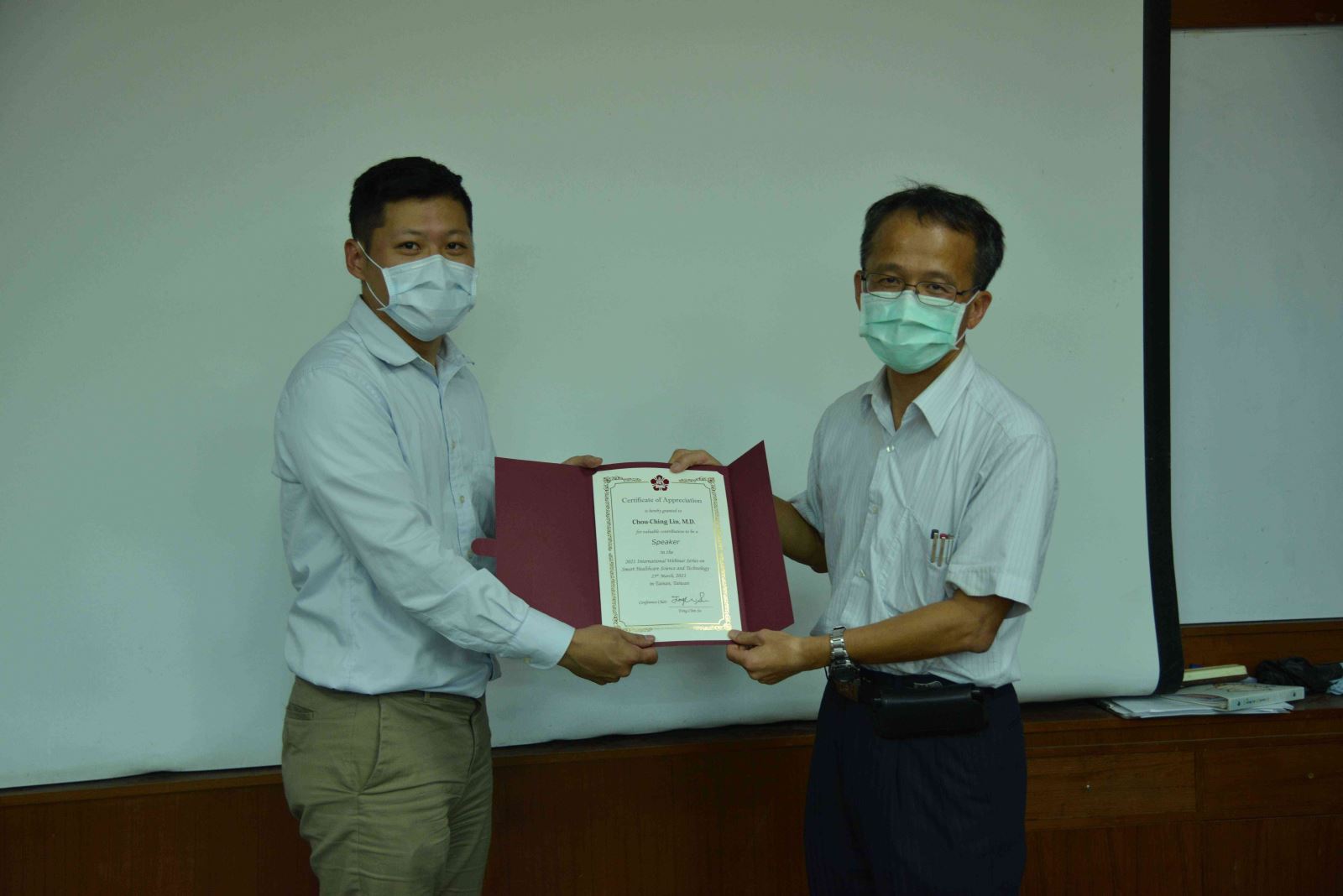
Pic 2: Prof.Chou-Ching Lin, MD introduced a brain-machine interface for quadriplegic patients.
“The pandemic has expanded our need for rapid tests and manage our health. The development of precision medicine not only has our medical system progressed, but also more personalized, offering better support and care to people of different needs in society., said Assistant Prof. Ting-Yuan Tu to conclude the webinar.
Taiwan Center for Smart Healthcare Science and Technology in Thailand invited smart technology experts from Taiwan, Thailand, and Southeast and Southern Asian regions, to share the latest knowledge and build international joint research teams, hoping to enhance the global partnership between Taiwan and these countries through technology exchange and field test collaboration.

